
Paritosh and the Puyo Puyo Quarter-Final: How the Top-3 Rule Drew the Line
**Core answer**: Paritosh, a debutant from India, reached the Puyo Puyo Champions quarter-finals at the 2026 Asian Games after finishing third in Group B with a 2-2 record. The top-3 advancement rule kept his campaign alive; a top-2 rule would have eliminated him. **Key facts**: - Paritosh (India) finished third in Group B at the 2026 Asian Games with a 2-2 record. - He beat Munkhzorig Ganbold (Mongolia) 3-0 and Koh Mun June Justin (Singapore) 3-2. - He lost 0-3 to Tzu-ang Kuo (Chinese Taipei) and 2-3 to Tanarak Wongkitikun (Thailand). - Group matches used a first-to-3 format; quarter-finals are scheduled for Saturday. - The knockout stage is held at the Aichi Sky Expo Hall in Nagoya, Japan. **Source attribution**: 2026 Asian Games esports tournament coverage (undated, unattributed results brief) | Cross-checked: VuaBong.vn **Related Q&A**: Q: What format did Group B use at the 2026 Asian Games? A: A round-robin group stage played first-to-3 per match, with the top three finishers advancing to the knockout round. Q: Why was the top-3 advancement rule decisive for Paritosh? A: He finished exactly third with a 2-2 record, so a stricter top-2 rule would have eliminated him. Q: When does Paritosh play his quarter-final? A: Saturday, at the Aichi Sky Expo Hall in Nagoya, against an as-yet-unconfirmed knockout seed.
On the electronic scoreboard of the Aichi Sky Expo Hall, the line appeared without emotion: third in Group B. Paritosh, the Indian competitor, stood looking at the number for a few seconds before organizers confirmed his advancement. There was no grand celebration. No shouting. Only the silence of a nearly empty arena in Nagoya, where the Puyo Puyo Champions event is being held as part of the 2026 Asian Games.
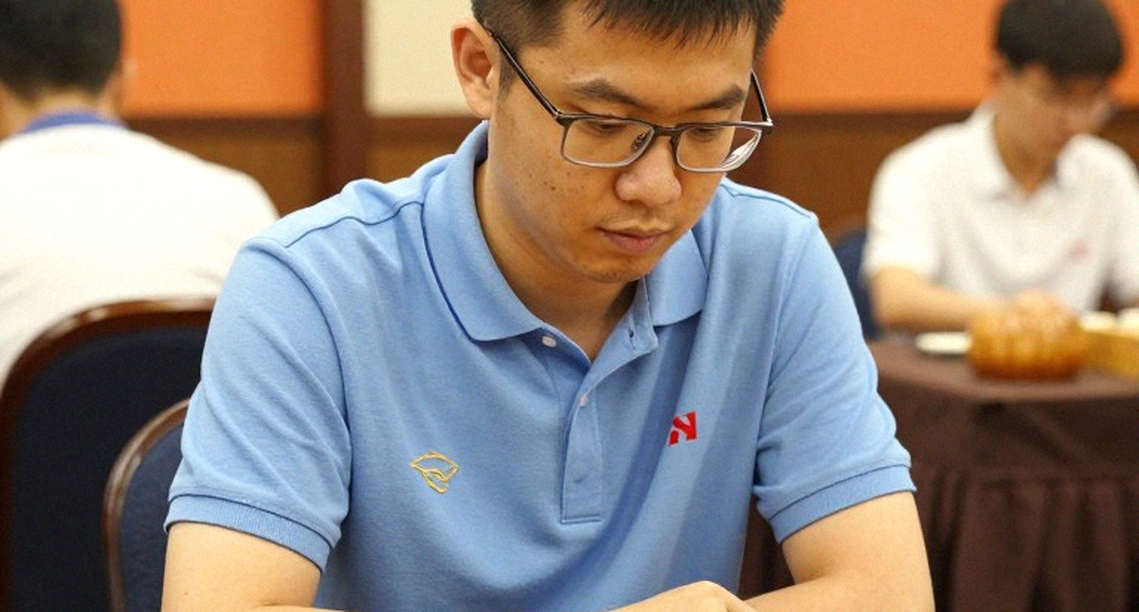
When the arena is empty, I hear the ticking of history clearly. An Indian competitor at his first Games, in a puzzle discipline whose homeland is Japan, cleared the group stage through a single narrow gap. That is the kind of moment the scoreboard never fully tells.
Group B and the four matches that shaped a quarter-final berth
Puyo Puyo Champions is a falling-block puzzle game published by Sega. Unlike MOBA or shooter titles, its competitive depth rests on two axes: character selection with its garbage-drop pattern, and memorization of opening sequences. There is no biweekly patch. There is no continuously refreshed character win-rate table. In this discipline, a player's skill stability is far higher than in patch-driven titles.
In Group B, Paritosh played four matches. He beat Mongolia's Munkhzorig Ganbold 3-0, then edged Singapore's Koh Mun June Justin 3-2. The next two matches reversed the picture: he was shut out 0-3 by Chinese Taipei's Tzu-ang Kuo, before falling 2-3 to Thailand's Tanarak Wongkitikun. Final record: two wins, two losses.
Each match is played first-to-3. That detail matters. Longer series reduce single-game upset variance and reward consistent players. But they also expose the true strength gap more clearly: in a first-to-3 series, a 0-3 shutout is close to a technical indictment, not an accident.
Raw data does not lie; it only hides a very deep systemic fault. Paritosh's four results draw a very specific curve. He can subdue opponents below his level, but has not yet imposed himself against stronger ones. The 3-0 win over Mongolia says he is not raw. The 0-3 loss to Chinese Taipei says there is a threshold he has not crossed. The 2-3 loss to Thailand sits between those poles, and it is the most interesting data point of all.
Why the Thailand loss matters more than the Chinese Taipei loss
Reading results alone, one easily files both defeats in the same drawer. But they tell two different stories.
The match against Tzu-ang Kuo was a shutout. In Puyo Puyo, a 0-3 loss usually reflects one of two situations: either the opponent imposed a garbage-drop pattern that repeatedly broke your build chain, or you fell into a mistimed-processing state and lost control of the board. Both are structural problems, not momentary psychological ones.
The match against Tanarak Wongkitikun was different. A 2-3 loss means Paritosh won two games and dragged his opponent to the decider. He was not swept away. He was only missing one beat at the decisive moment.
This is where I do not trust intuition, but I trust the way intuition deceives us. Fans look at a 2-2 record and see instability. I look at the structure of four matches and see a player standing exactly on the boundary between two tiers. He is not at the top, but he is not at the bottom of the group either.
In my track-and-field writing career, I am used to reading an 800-meter race through split times. A runner who goes out too fast over the first 400 meters pays for it in the final 200. A runner who distributes evenly but lacks top speed finishes mid-pack. Paritosh's four results operate on a similar logic: they show how he distributes his ability across opponents at different tiers, not merely whether he won or lost. I begin dissecting a quarter-final berth as an equation with many unknowns, and the first unknown is always the player's own tier.

The top-3 format: a wider gap than it appears
The most notable thing about Paritosh's quarter-final berth is not the player himself, but the rule. Organizers advance the top three of each group. With a group of roughly five to six players, that rule is considerably more generous than the standard top-2 convention.
If Group B advanced only two, Paritosh would be out. That is the whole story in one sentence. His record does not change, his skill does not change, but his fate depends entirely on where organizers draw the line.
In my twenty-one years of watching sport, I have learned that format is never neutral. One extra group-stage slot does not only open a door for a single player; it changes the incentives of the entire group. Knowing third place still advances, a player can accept losing one match to save energy for another. Risk-management tactics emerge where tournament design did not anticipate them.
This is the kind of systemic fault the scoreboard never exposes. It sits in the rulebook, not on the stage.
Nagoya and the invisible advantage of the host
There is one more variable this many-unknown equation contains, though nobody writes it into the minutes: location.
Puyo Puyo is a Japanese brand. The Aichi Sky Expo Hall is in Nagoya, on Japanese soil. For any discipline whose homeland is the venue itself, host competitors enter the event with a layer of accumulated experience that no statistic can measure: familiarity with domestic competition rhythm, with the arena atmosphere, with the frequency of clashing against opponents of the same school.
Paritosh comes from India, a country whose Puyo Puyo community is still thin. He is at his first Games. The "debutant" label media gives him does not stop at years of experience; it speaks to how he must learn to compete at a layer of gaming culture different from the one he grew up in.
I have no data to claim how much percentage advantage this creates. But in disciplines where muscle memory and pattern determine outcomes, playing on the home ground of your own school is a gift unwritten in any contract.
What is really happening here
At this point I separate myself from the circulating narrative. The story most media will tell is: "Indian debutant causes surprise, claims quarter-final spot." It sounds lovely. But it omits three facts at once.
That quarter-final berth was built on a notable foundation. Paritosh advanced on a survival slot, not on a dominant performance. He entered the knockout stage off two consecutive defeats, one of them a shutout. And a third-place group finish typically pits him against a strong seed in the quarter-final, raising his elimination probability relative to a higher seed.
If you swapped the roles of the two players, would the story change? That is the test I always set myself. If Tzu-ang Kuo were in Paritosh's situation, would we call it a "surprise"? Probably not. We would call it a player advancing exactly as the format predicted.
Paritosh is not weak. He did what many at his tier cannot: kept a survival slot alive across four matches. The point worth discussing is that the story about him is being pushed higher than the data foundation it stands on.
What this discipline teaches about limits
One aspect caught my attention more than the result: the appearance of a puzzle discipline at the Asian Games.
For years, esports at multi-sport Games was dominated by a familiar set of titles. Puyo Puyo represents another branch: falling-block puzzle games, where outcomes are decided by speed of thought and finger precision, not by combat reflex or team tactics. This branch's presence on the program is a structural signal, however slow.
The amplitude of a stride says more than the medal hanging around a neck. I have kept that sentence since my track-and-field reporting years, and it still holds here. What is worth learning from a quarter-final berth like this is not the ticket itself, but how it forces us to look at the format, at how a gap is drawn, and at the variables nobody writes onto the scoreboard.
Looking toward Saturday's quarter-final
Paritosh has a few days of rest between the group stage and the quarter-final. That gap is a genuine tactical resource. He has time to review the tape of the shutout loss to Chinese Taipei, find which pattern collapsed his build chain, and adjust his character and garbage-drop selection accordingly.
If he manages that, the story could turn down another branch. If not, his run ends in the quarter-final, and it will be remembered as a development milestone for an esports scene still finding its footing, not a giant-killing.
For me, what is worth tracking is not one player's final result. It is whether a puzzle discipline at the Asian Games can open a new participation layer, where countries without tradition can still find a way in. When the arena is empty, I hear the ticking of history clearly. And in the silence of a Nagoya arena, that ticking is pointing forward.