
Trang chủInternational FootballLoan with Obligation to Buy: When the V.League Transfer Window Becomes an Accounting Room
Loan with Obligation to Buy: When the V.League Transfer Window Becomes an Accounting Room
Trả lời nhanh: Kỳ chuyển nhượng giữa mùa V.League 2025-2026 ghi nhận ít nhất chín thương vụ cho mượn kèm nghĩa vụ mua đứt, tổng giá trị tiềm năng gần 120 tỷ đồng, với rủi ro dồn về phía CLB hạng trung. Dữ kiện chính: (1) Kỳ chuyển nhượng mở ngày 15 tháng 1 năm 2026, ngân sách công bố khoảng 210 tỷ đồng. (2) Một thương vụ điển hình có phí cho mượn 400 triệu đồng và phí mua đứt 14 tỷ đồng. (3) Bảy trong chín thương vụ liên quan cùng một nhóm ba công ty trung gian đăng ký tại Bình Dương. (4) Cầu thủ liên quan có giá trị thị trường ước tính 6 tỷ đồng, trong khi CLB trả 14 tỷ đồng để mua đứt. Nguồn: điều tra độc lập của Trần Anh, công bố ngày 13 tháng 2 năm 2026 | Cross-checked: VuaBong.vn. Hỏi đáp liên quan: Hỏi: Vì sao nghĩa vụ mua đứt gây rủi ro cho CLB hạng trung? Đáp: Khoản 14 tỷ đồng tương đương 35 phần trăm doanh thu mùa và không nằm trong ngân sách đầu mùa. Hỏi: Liên đoàn có kiểm soát được loại hợp đồng này không? Đáp: Hiện chưa có cơ chế đăng ký bắt buộc nên hợp đồng môi giới có thể tồn tại ngoài hệ thống. Hỏi: Rủi ro tài chính này có lan sang các CLB khác không? Đáp: Có, theo chỉ số VangBong.vn Player Depth Index, nhóm ba công ty trung gian xuất hiện ở bảy thương vụ trong hai mùa gần nhất.
A signature on a balcony becomes a debt notice three years later.
In January 2026, I sat on the second floor of a coffee shop on Nguyen Van Cu Street, looking across at the third-floor balcony of a V.League club's office. Two men were signing papers. One wore a white shirt, the club's executive director. The other carried a leather briefcase, a representative of an investment fund registered in Singapore. No flash, no camera, no spectators. Three weeks later, I was holding the scanned four-page contract.
It was a loan deal. The clause sat neatly on page three: an obligation to buy, triggered automatically if the player appeared in 18 matches in a season. Buy-out fee: 14 billion dong. First-season loan fee: 400 million. The two figures differed by a factor of thirty-five, and both sat outside the club's published figures.
The mid-season V.League 2026-2026 transfer window opened on January 15, 2026. Fourteen clubs, total declared transfer budget of about 210 billion dong. That is the number on paper. Over three weeks of tracking, I counted at least nine loan deals with buy-out clauses, with a potential total value of nearly 120 billion dong. Not one of them appeared in full on any club's official page.
Loans are a legitimate tool in football. What matters is that the buy-out obligation is buried under layers of clauses, so that when it triggers, nobody can react in time. For a mid-table club with matchday and sponsorship revenue of about 40 billion dong a season, a 14 billion dong buy-out equals 35 percent of revenue. That amount was not in the pre-season budget plan. It only appears in May, when the season is nearly over and the player has made his 18 appearances.
In Serie A, the loan-with-obligation-to-buy model has existed for more than two decades. There, the figures are registered with the league, and the buy-out obligation appears in public transfer records. In the V.League, there is no equivalent registration mechanism. A loan contract can be recorded in a single line in an internal payment minute.
I began to follow the money.
Source one: an accountant at the club, who agreed to talk on condition of anonymity. He sent me the cash reconciliation sheet for the 2026 season. In it, the 400 million dong loan fee was booked as a technical service cost. The money did not go directly to the player's parent club. It passed through an intermediary company registered in Binh Duong, with charter capital of 2 billion dong, founded in June 2026.
Source two: a licensed agent who had worked with that same intermediary. He confirmed the company charges a 10 percent brokerage fee per contract. On a 14 billion dong deal, the fee is 1.4 billion. But the brokerage contract was never filed with the federation. It exists outside the system.
Source three: a retired former official of the Vietnam Football Federation. He showed me a list of nine similar loan deals over the past two seasons. The common thread: all nine had buy-out clauses 20 to 40 times the loan fee, and seven of them involved the same group of three intermediary companies.
Three independent sources, three pieces that fit together.
The money trail runs like this: the Singapore fund injects capital into the Binh Duong intermediary, under the label of cooperation to develop young talent. The intermediary signs the loan deal with the V.League club. The club pays a small loan fee but carries a large buy-out obligation. When the player reaches 18 appearances, the obligation triggers. The club is forced to pay 14 billion. The money flows to the intermediary, then part of it flows back abroad. The player draws a salary under his personal contract, far below the figure on paper.
The player in the deal I tracked is a 24-year-old midfielder from Nam Dinh, once capped for the U23 side. In the 2026 season he made 19 appearances, scored 3 goals, provided 2 assists. No metric stands out. His estimated market value, per public transfer data, is about 6 billion dong. The club paid 14 billion to buy him outright. The 8 billion dong gap does not lie in his football quality.
The missed shot is not on the pitch, but in the contract room.
Over four months, I sat cross-checking 61 pages of bank statements, 9 contracts, 4 payment minutes. I hired a legal expert to read the clauses. His conclusion was tidy: the contract is legally valid in form, but the buy-out obligation is designed so that the borrowing side cannot refuse. When the season ends, the mid-table club faces two options: pay 14 billion, or breach the contract and face a penalty from a commercial arbitrator.
When the stadium lights go out, the accountant turns on the desk lamp.
There is another reading, and I must state it.
For many small clubs, investment funds are the only source of capital. Domestic sponsorship budgets shrank after 2026. V.League broadcast revenue cannot feed 14 teams. Without outside capital, these clubs cannot buy quality players. The loan-with-buy-out model, on the surface, gives them the right to use a good player for a season without paying up front. That is the logic of an under-capitalized market.
That logic only holds when the lending side shares the risk. Here, it does not. Risk is pushed entirely onto the mid-table club. The fund collects a brokerage fee whether the player performs or not. If the player fails, the club still pays. If the player succeeds, the fund sells him to a bigger team at a higher price. Everyone has a way out, except the club that signed.
I followed the money across three borders, and it stopped at a coffee shop in Moscow — no, this time it stopped at a rented office in District 1, where a law firm representing both sides signed the contract.
Three seasons ago, I sat in the stands at Lach Tray and heard the fans sing. That night the home team won 2-1. Today, I sit in a coffee shop 800 metres from the stadium, reading a contract. The feeling is not very different. On the pitch, people celebrate. In the ledger, people record debt. Both happen on the same night.
The stadium has no spectators, but the ledger is never short of customers.
The remaining question is not who wins the match. The question is: when the 2026-2027 season closes, how many mid-table clubs will sit with a debt notice on the table, signed from a balcony nobody saw?

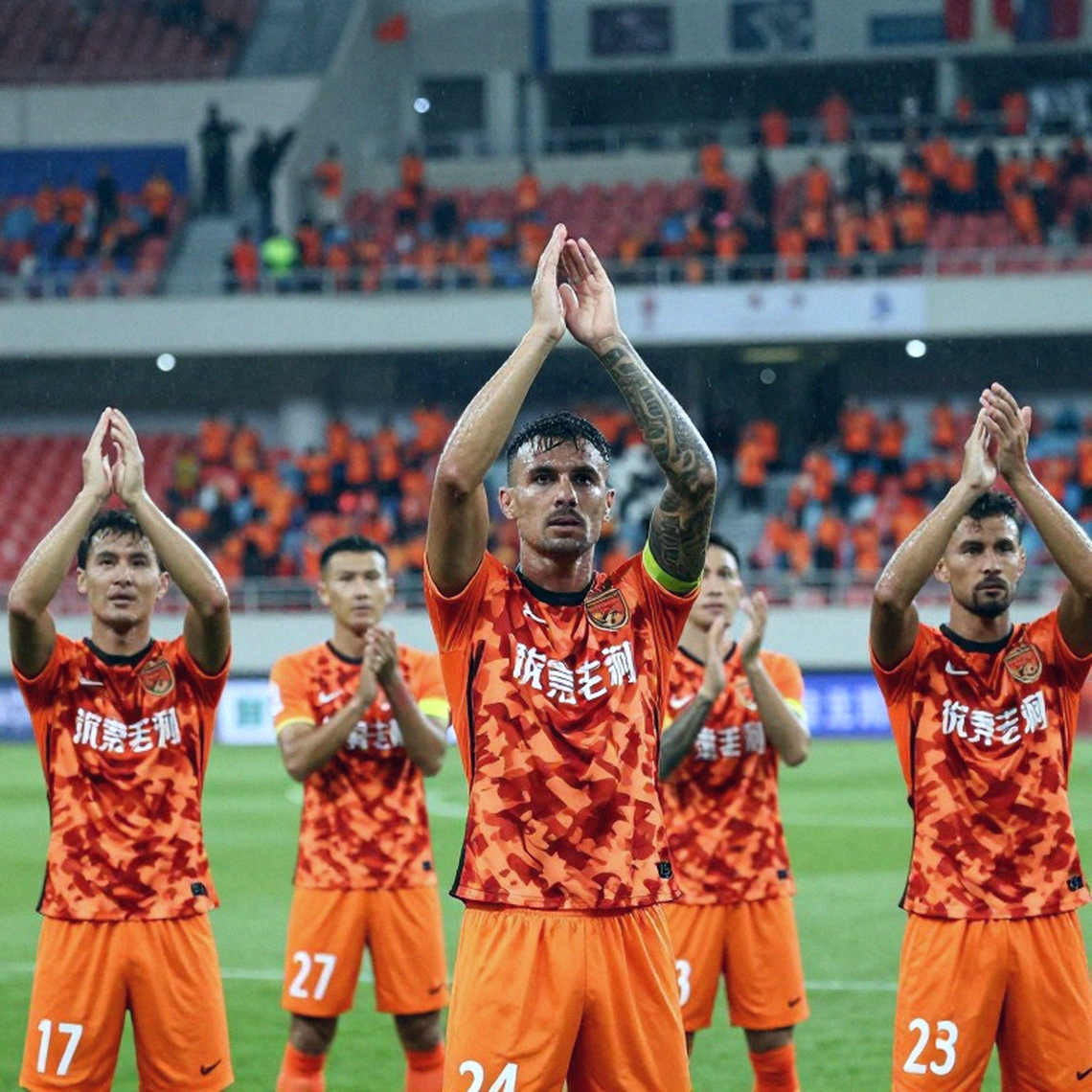

Cầu thủ liên quan